Most people come to somatic yoga because something feels off. Their body feels tight, stressed or disconnected, and regular exercise does not seem to fix it.
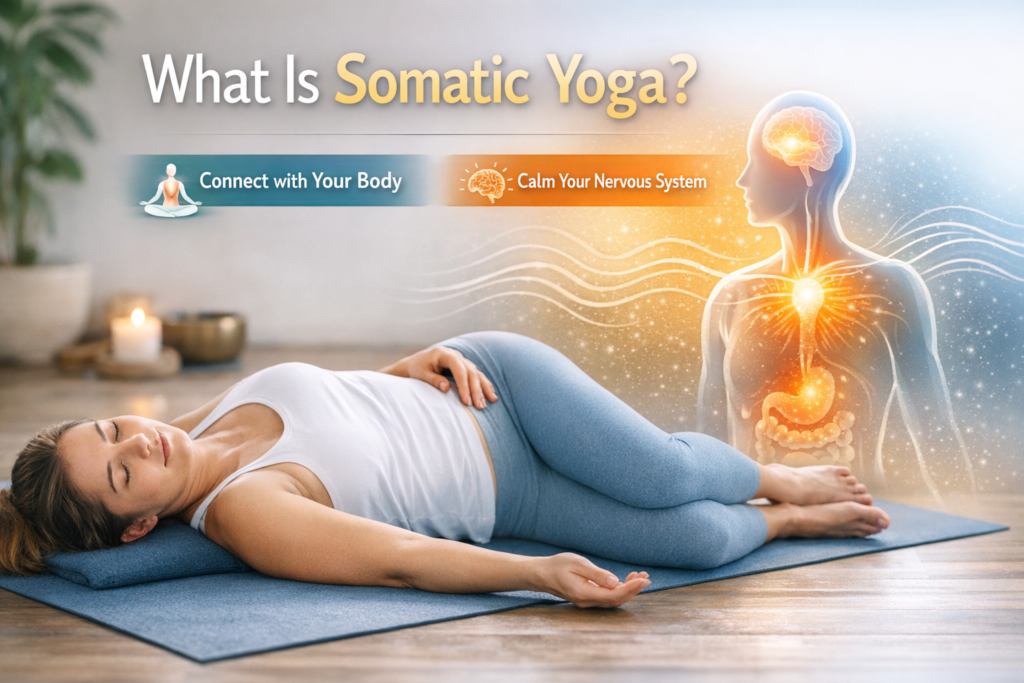
Somatic yoga is a slow, mindful form of yoga that focuses on how movement feels from the inside. Instead of trying to perfect a pose, you pay attention to sensations, breath and subtle shifts in tension.
The word “somatic” simply means body awareness. It is about noticing what is happening in your body while you move, and letting that awareness guide you.
This approach changes everything. You stop performing yoga and start listening to your body.
How Somatic Yoga Is Different From Regular Yoga
In many modern yoga classes, the goal is clear alignment. Straight arms, deep stretches, strong holds, clean shapes.
There is nothing wrong with that. But for people who feel anxious, overwhelmed or living in chronic tension, that external focus can miss the deeper issue.
Somatic yoga shifts the focus inward. The pose matters less than your nervous system’s response to it.
External Focus vs Internal Awareness
In a typical class, you may hear cues like “lengthen more” or “sink deeper.” In somatic yoga, you hear cues like “notice where you feel this” or “what happens if you soften by ten percent.”
This is not about pushing. It is about sensing.
The movement becomes smaller, slower and more intentional. Sometimes almost subtle.
Performance vs Regulation
Somatic yoga is not about flexibility goals or physical achievement. It is about helping your nervous system shift out of fight, flight or freeze.
Your nervous system is the part of you that reacts to stress. It cannot tell the difference between a busy inbox and a real threat.
Slow, aware movement helps signal safety. That safety allows the body to release tension it has been holding for years.
The Role of the Nervous System
If you struggle with anxiety, chronic stress or trauma, your body may be on high alert most of the time. Even when nothing dangerous is happening.
This can show up as shallow breathing, tight shoulders, jaw clenching, digestive issues or chronic pain.
Somatic yoga works directly with this stress response.
Fight, Flight and Freeze
When your system is in fight or flight, your muscles brace. Your breath shortens. Your mind speeds up.
When you are in freeze, you may feel numb, heavy or disconnected from your body.
Somatic yoga offers a way back to regulation. Through slow, safe movement and breath, your body learns it does not have to stay braced.
Key Benefits of Somatic Yoga
- Improved body awareness: You begin to notice patterns of tension you did not realize you had.
- Reduced stress: Slow breathing and mindful movement calm the stress response.
- Support for trauma recovery: Gentle movement helps the body process held stress safely.
- Less chronic pain: Releasing muscular holding patterns can ease long-term discomfort.
- Better sleep: A regulated nervous system falls asleep more easily.
These benefits do not come from pushing harder. They come from listening more closely.
What a Somatic Yoga Practice Looks Like
If you imagine an intense flow class, clear that image. Somatic yoga is slower and often done on the floor.
You may repeat the same small movement several times. The goal is not stretch, but awareness.
You move in and out of sensations gently. Always staying below pain.
Breath as the Anchor
Breathing plays a central role. Not forced breathing, but aware breathing.
You might notice how your ribs move on the inhale. Or where the breath gets stuck.
When the breath deepens naturally, your system begins to settle.
Micro Movements
Many somatic movements are small. You may tilt your pelvis slightly, roll your head slowly or shift weight from one foot to another.
Small does not mean weak. Small creates precision in awareness.
That awareness is what retrains old patterns.
Examples of Somatic Yoga Exercises
These are not about perfect form. Move slowly and pay attention to sensation.
1. Gentle Floor Twist
Lie on your back with knees bent and feet on the floor. Slowly let both knees fall to one side.
Notice where the stretch feels easy and where it feels guarded. Return to center and repeat to the other side.
Keep the movement small enough that you can breathe calmly.
2. Pelvic Rocking
Still on your back, gently tilt your pelvis forward and back. Feel your lower back press into the floor, then lift slightly.
This simple motion increases awareness in the lower spine. It can release deep tension in the hips and back.
3. Slow Cat Cow
On hands and knees, round your spine slowly. Then arch gently.
Go slower than you think you should. Let your breath guide the pace.
Notice how your body responds when you soften instead of push.
4. Seated Forward Fold, Modified
Sit upright with legs extended. Instead of reaching aggressively forward, hinge slightly at the hips.
Stop at the first sign of resistance. Breathe there.
See if the body allows a little more space without force.
Who Can Benefit Most From Somatic Yoga
Almost anyone can benefit. But some groups find it especially helpful.
If you feel disconnected from your body, always tense or frequently in pain, this practice may meet you where you are.
People With Anxiety
Anxiety often lives in the body. It shows up before you consciously feel it.
Somatic yoga gives you tools to notice early signs. That awareness helps you intervene before overwhelm builds.
People Healing From Trauma
Trauma is not just a memory. It is a physical imprint in the nervous system.
Somatic work allows for gentle re-entry into the body. The pace matters.
This should be done in a safe, supportive space when possible.
People With Chronic Tension or Pain
Many pain patterns are linked to long-term muscle holding. The body forgets how to release.
Through repeated, mindful movements, somatic yoga retrains those patterns.
The goal is not to stretch harder, but to teach the body it can soften.
How To Start a Somatic Yoga Practice
You do not need advanced flexibility. You do not need special equipment.
You need time, patience and a willingness to slow down.
Create a Calm Environment
Choose a quiet space. Turn off distractions.
Dim lighting can help your system feel less stimulated.
Go Slower Than You Think
People often move too quickly at first. Slow the movement down.
If you feel strain or rush, you are likely pushing past awareness.
Stay Below Pain
Discomfort is information. Sharp pain is a stop sign.
Somatic yoga works best when you stay in a range that feels safe.
Common Misconceptions
Some people believe somatic yoga is too gentle to be effective. In reality, it works on deeper layers than strength training alone.
Others think it replaces traditional yoga. It does not have to.
It can complement other forms of movement by restoring balance.
Consistency Over Intensity
The shift you are looking for will not come from one long session. It comes from consistent, short practices.
Even ten minutes a day can help reset patterns of tension.
The nervous system learns through repetition.
Final Thoughts
Somatic yoga invites you to slow down and inhabit your body again. In a culture that rewards pushing and productivity, that is radical.
If you are tired of feeling tense, disconnected or always on edge, working with your body instead of against it can genuinely change how you feel.
If you are curious about trying somatic yoga in a safe, guided setting, join us for an online or in-person session. Learn how to work with your own body and finally feel what it is capable of when it feels safe.