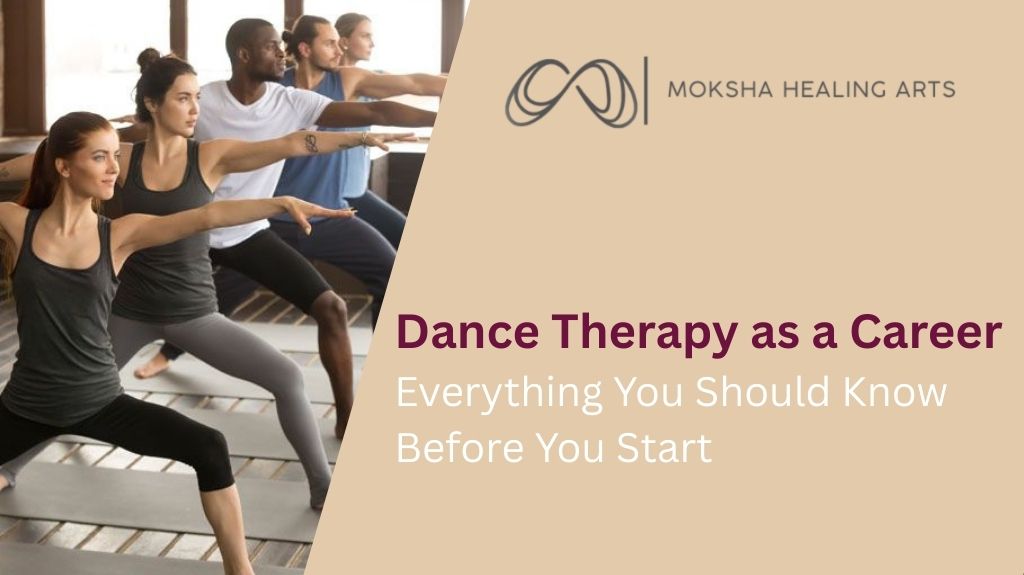
If you had asked any dance therapist what dance therapy meant a few years ago, they might say it’s simply using movement to help people feel better. But as the field has grown, many practitioners have realised that a dance therapy career is much more than just dancing. It’s about understanding how the body holds emotions and how movement can support healing, awareness, and personal growth.
Today, dance movement therapy is becoming more visible in both wellness and therapeutic spaces. A movement therapist uses guided movement, breath, and body awareness to help people express feelings that may be hard to put into words. Instead of focusing on performance, the work is centred on the connection between mind, body, and personal experience.
In this guide, you’ll learn what dance therapy is, explore the real benefits of this growing field, and understand how to become a dance therapist if you’re thinking about building a meaningful career in dance therapy.
What Is Dance Therapy?
Dance/movement therapy (DMT) is a holistic therapy that uses movement and dance to support emotional, mental, and physical well-being. The American Dance Therapy Association describes it as the use of movement to improve emotional, social, cognitive, and physical integration. It is also a form of expressive therapy, similar to art or music therapy, where the body becomes the main tool for communication and healing.
Movement has a strong connection to mental health, and for many people, expressing emotions through the body feels more natural than talking. In dance movement therapy, movement becomes a language that helps people explore feelings, build awareness, and process experiences in a safe way.
Unlike performance dance, this work focuses on awareness rather than technique. A trained dance therapist gently guides individuals through movement experiences, observing posture and body language to help them explore emotions, release tension, and reconnect with themselves.
Why Choose a Dance Therapy Career?
Many people are drawn to a dance therapy career because it blends creativity with meaningful healing work. Instead of only talking through emotions, a movement therapist works with body awareness and expression.
You may find opportunities in:
- Wellness studios
- Retreats and workshops
- Community programs
- Private sessions
Building a career in dance therapy allows you to grow personally while supporting others on their journey.
What Does a Dance Therapist Actually Do?
A dance/movement therapist is a mental health professional who uses movement and dance to promote emotional, social, cognitive, and physical integration. They work with clients to improve body image, self-esteem, and communication by paying attention to nonverbal cues and spontaneous movement. Through this process, clients can explore emotions, manage challenges such as anxiety or depression, and support their overall healing journey.
Some of the ways a dance therapist works include:
Assessment of nonverbal behaviour
Analysing a client’s posture, movement patterns, and body language to better understand their emotional and psychological state.
Facilitating movement interventions
Using techniques like “mirroring” (echoing client movements) to build empathy, or using movement metaphors to help clients physically express and process challenges.
Creating therapeutic sessions
Designing individual or group sessions for people experiencing trauma, emotional challenges, autism, dementia, depression, or developmental concerns.
Connecting mind and body
Supporting clients in connecting with unspoken emotions, strengthening self-awareness, and building confidence through movement.
Blending movement with therapy
Combining verbal conversation with movement practices to create a more holistic approach to mental health care.
Benefits of Dance Therapy
Dance therapy offers holistic benefits by combining movement with emotional, cognitive, and physical well-being. It helps reduce stress, anxiety, and emotional tension while improving body awareness, confidence, and overall balance. Because movement allows people to express themselves without relying only on words, it can also support trauma healing and emotional release.
Improved Emotional and Mental Health
- Stress and anxiety relief through movement
- Support for trauma processing and emotional expression
- Improved self-esteem and emotional regulation
Better Physical Health
- Better mobility, flexibility, and coordination
- Reduced physical tension
- Support for overall body awareness
Cognitive and Social Benefits
- Improved focus and mental clarity
- Better communication and stronger social connections
Dance movement therapy can support many different populations, including people experiencing trauma, emotional challenges, or developmental differences.
How to Become a Dance Therapist?
If you’re exploring how to become a dance therapist, the journey usually begins with building both movement experience and emotional awareness. Some people follow a clinical path, while others begin through somatic practices, yoga, or expressive movement training.
Steps to Start a Dance Therapy Career
Build a Foundation in Movement
Practices like yoga, somatic work, or dance training help you understand how movement supports emotional expression.
Learn About Psychology and Emotional Health
Understanding emotions and trauma awareness supports safe and meaningful facilitation.
Join a Dance Movement Therapy Training
Structured programs combine movement practice with theory and guided learning.
Gain Practical Experience
Workshops, mentorship, and assisting sessions help you develop confidence as a movement therapist.
Continue Learning and Growing
Many practitioners deepen their skills through advanced training, retreats, and professional communities.
Skills You Need Before Starting a Career in Dance Therapy
While training is important, the heart of a dance therapy career comes from personal qualities and lived experience.
Some helpful skills include:
- Body awareness and presence
- Empathy and emotional understanding
- Comfort with creative expression
- Ability to hold a safe and supportive space
- Openness to personal growth
These skills often grow naturally through somatic practices, yoga, breathwork, and personal exploration.
How Much Dancing Is Actually Involved?
One of the biggest misconceptions is that dance therapy involves constant dancing. Movement can be gentle, slow, or even done while seated. The focus is not on performance but on awareness and emotional expression guided by a trained dance therapist.
Is a Dance Therapy Career Right for You?
A dance therapy career may be a good fit if you feel connected to movement, creativity, and emotional healing. It suits people who enjoy supporting others while also exploring their own personal growth.
Conclusion
A dance therapy career offers a meaningful way to combine creativity with emotional healing and personal growth. As more people explore body-based approaches to wellness, the role of the dance therapist and movement therapist continues to expand.
If you feel drawn to movement as a path of connection and transformation, understanding what dance therapy is and learning how to become a dance therapist can be the first step toward a fulfilling journey.